
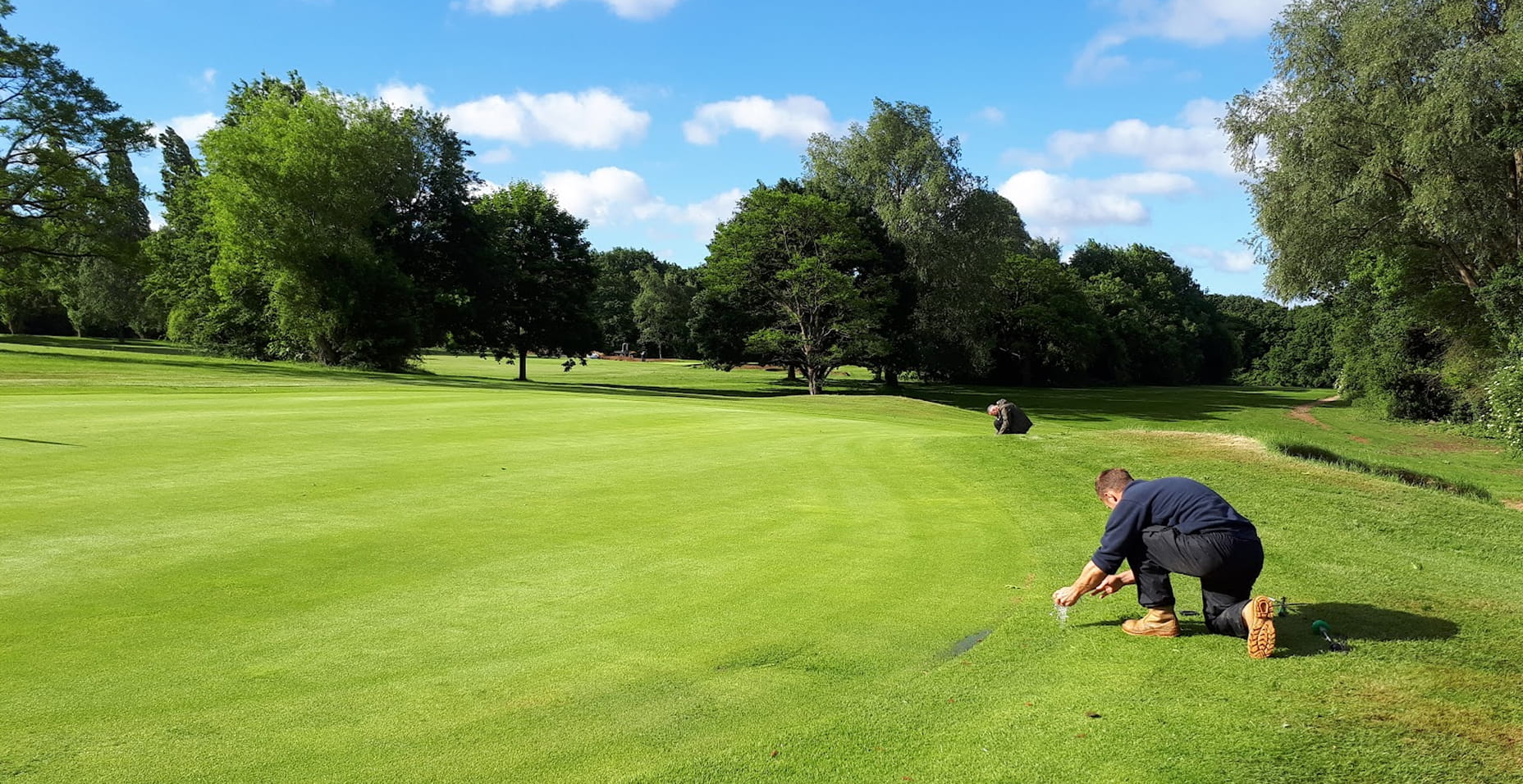
Irrigation sensors are a key tool for optimizing water consumption and improving the performance of any advanced irrigation system. However, their effectiveness largely depends on correct installation and configuration.
At Arux Ingeniería, with our experience in advanced technical support, we have detected a series of common errors in the installation of irrigation sensors that limit their operation or even cause counterproductive results. We explain them below so you can avoid them.
Selecting the wrong sensor for the soil type or system
One of the most frequent errors is using a sensor that is not the most suitable for:
-
The type of soil (sandy, clayey, loamy…).
-
The type of crop or vegetation.
-
The configuration of the irrigation system.
For example, a soil moisture sensor with a limited reading range will not yield good results in soils with high variability in water retention.
Recommendation:
Before purchasing a sensor, it is essential to carry out a technical analysis and select the most suitable device for the actual conditions of the system.
Placing the sensor in a non-representative area
Another common error is installing the sensor in a location that does not reflect the average conditions of the area to be controlled.
Typical errors
-
Installing it in a shaded area when most of the area is sunny.
-
Placing it in a point of atypical puddling or drainage.
-
Placing the sensor too close to emitters or edge elements.
Recommendation
The sensor must be located in a representative area of the plot, with solar exposure and humidity characteristics similar to the average of the area to be controlled.
Installing the sensor at an incorrect depth
In the case of soil moisture sensors, the installation depth is critical. If the sensor is placed too shallow or too deep:
-
It will not properly detect the active root zone.
-
It will provide readings that are not useful for irrigation programming.
Recommendation
Install the sensor at the depth corresponding to the active root horizon of the vegetation being irrigated.
Failing to verify correct integration with the control system
Sometimes, even if the sensor is correctly installed physically, it does not integrate properly with:
-
The irrigation controller.
-
The weather station.
-
The management platform.
This causes the sensor data not to be used properly to adjust irrigation, negating much of its value.
Recommendation
Verify correct communication between the sensor and the control system. Check that the irrigation programming actually responds to the data provided by the sensor.
Lack of maintenance and calibration
Finally, a frequent error is forgetting about the sensor once it is installed. Like any device, sensors require:
-
Periodic cleaning (depending on the type of sensor).
-
Review of wiring and connections.
-
Calibration according to the evolution of the system and the soil.
Without this maintenance, it is very common for sensors to end up providing erroneous or inconsistent data.
Recommendation
Establish a periodic maintenance and calibration plan, especially in critical systems such as those for golf courses or large urban parks.
Correct installation of irrigation sensors is essential
Irrigation sensors are an extremely useful tool for optimizing water consumption, but only if they are installed and managed correctly. Avoiding installation errors allows you to:
-
Obtain reliable and representative data.
-
Program irrigation more precisely.
-
Save water and energy.
-
Improve the quality of the turf or vegetation.
At Arux Ingeniería, we advise you on:
-
Selection of the right sensor.
-
Professional installation.
-
Integration with advanced control systems.
-
Maintenance and calibration.
Do you want to improve the performance of your irrigation system with an optimized sensor installation? Contact us and we will help you implement the most effective solution.